Go-Go and the Sound of Washington
Washington produced a popular music that never quite became a national genre, and the reasons it stayed home are close to the reasons it works. Go-go is built for a room. It depends on a crowd that answers back, on percussion that does not stop between songs, and on the assumption that most people present know which block, school or family name is being called from the stage. Remove those conditions and a recording of it can sound like a long rhythm track with the point edited out.
What follows is an account of the mechanics of the form, the economics that kept it regional, and the civic argument that made it official. Like much else in this city, it is also a story about rooms — who may rent one, and how loud it may be after eleven o'clock.
The beat, described plainly
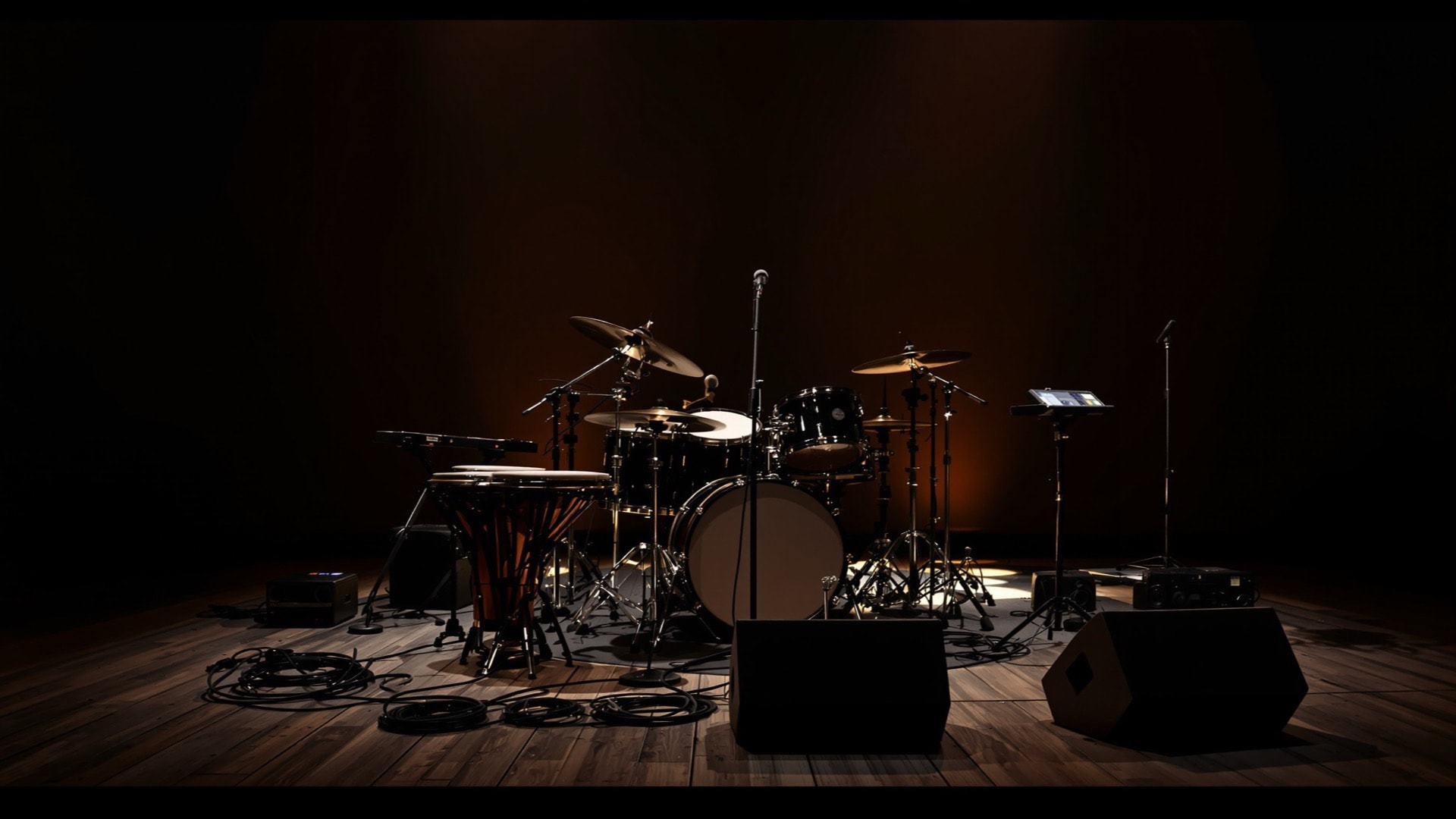
Go-go rests on a conventional funk rhythm section — bass, guitar, keyboards, often horns — and adds a hand percussion front line that carries the identity of the form. Congas, rototoms, timbales and cowbell play across the drum kit rather than merely with it. The resulting pattern is swung and densely syncopated: accents fall between the counted beats, the cowbell states a pulse the snare deliberately declines to double, and the whole figure leans forward without speeding up.
The defining feature, though, is not any single rhythmic figure. It is continuity. A go-go set does not stop. Songs surface out of the percussion, hold for a while, and dissolve back into it, so that a two-hour performance is one unbroken groove with material passing through it. Within that structure a tempo change is a transition and a silence is a mistake.
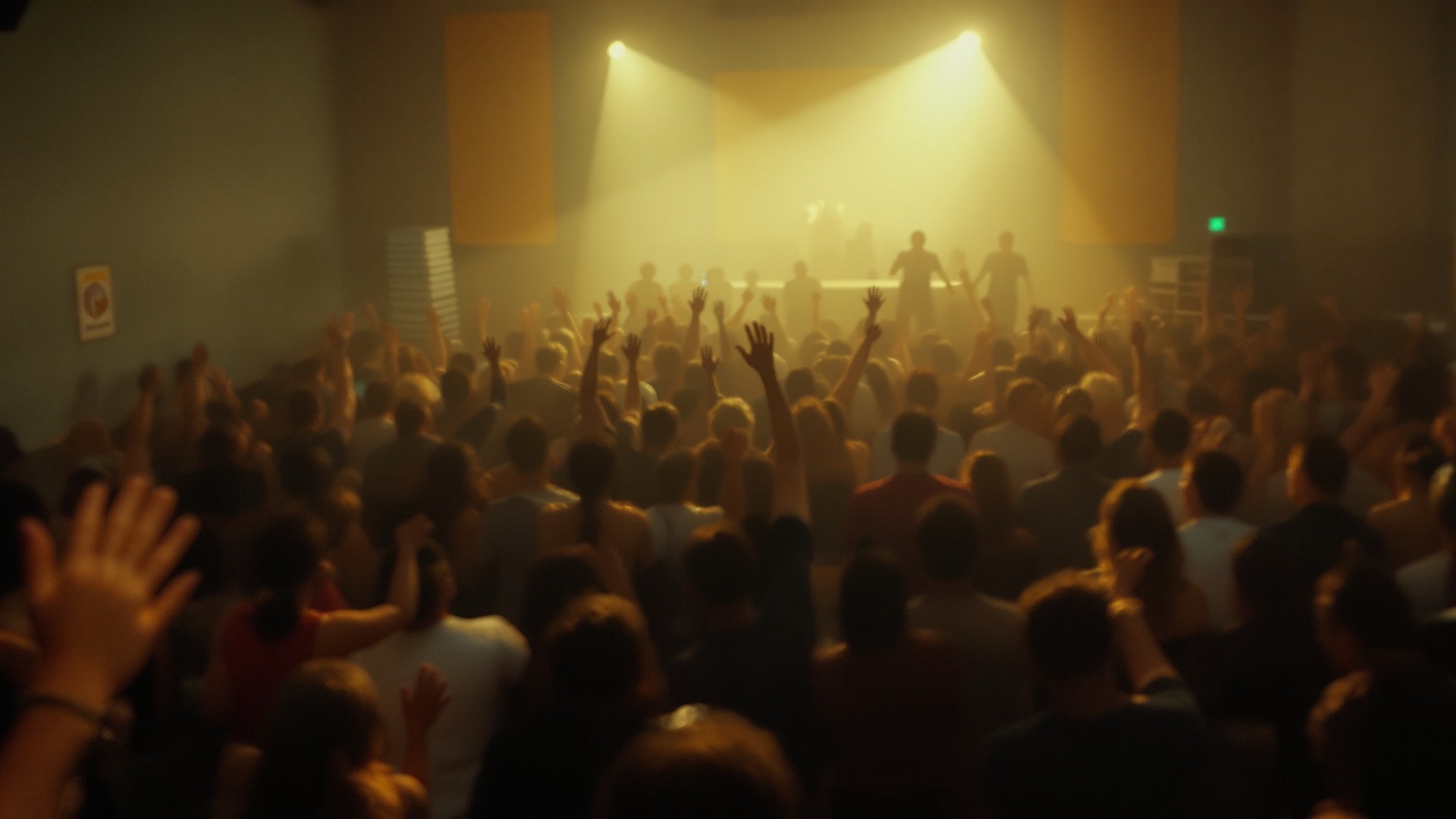
Over the bed sits call and response. The lead voice works closer to a host than to a singer, setting up phrases that the room completes. The crowd's half of the exchange is not decoration or enthusiasm; it is a scheduled part of the arrangement, and a band that cannot draw it will lose the pocket the music depends on.
A recording of go-go documents a band. The music itself was the room, and the room does not fit on the tape.
Shout-outs and the local index
The most distinctive lyrical convention is the shout-out: names of neighborhoods, streets, schools, workplaces, birthdays and families called from the stage and answered by whoever they belong to. Functionally it is a live index of the crowd, a way of establishing out loud and in public who has turned up.
It is also part of why the music is so hard to export. A listener elsewhere hears an unfamiliar list. A listener here hears the social map set out in our neighborhood guide, with people attached to it. To a real degree the content of the song is the audience.
The 1970s and Chuck Brown
Go-go developed in Washington during the 1970s, and Chuck Brown, who died in 2012, is widely credited as its originator. The problem he is generally described as solving was practical rather than aesthetic: how to hold a floor across an entire night without the dead air between numbers that lets a crowd cool off, drift toward the door and leave.
The answer — run the percussion straight through the gaps, and talk to the room over the top of it — turned out to be a genre. That origin explains most of the form's later behavior. It was engineered for continuous live performance, in ordinary rented rooms, for dancers rather than for listeners at home.
Why it stayed regional
Recorded go-go has always been a compromise. The record business of the period wanted a three-minute single with a beginning and an end, which is precisely the shape the music was invented to avoid, and a studio take with no crowd in it has no second half to its call and response.
What circulated instead was live tape. For years the real distribution system was cassette recordings of particular nights, copied and passed hand to hand, dated and identified by band and by room in the way live jazz tapes once were. That economy served the audience efficiently and the national market not at all: no catalogue, no radio-length edits, few royalties, and the value of the music held in attendance rather than in ownership.
Rooms, licensing and noise
Because the form lives in rented halls, clubs and open-air corners, its history is inseparable from the administrative business of who may operate a venue and how loud amplified music may be. Licensing, hours and noise enforcement are local decisions taken building by building, and over decades they were applied to go-go with a consistency its audiences noticed.
The friction became a public argument in 2019, when amplified music outside a corner storefront in a rapidly changing neighborhood was switched off after complaints and a citywide campaign formed in its defense. The dispute was nominally about a sound system. The subject was displacement, and everyone involved understood that.
The official music of the District
In 2020 the Council of the District of Columbia designated go-go the official music of the District through D.C. Law 23-71, the Go-Go Official Music Designation Act of 2020. Designations of this kind are usually read as symbolic, and largely they are.
The weight of this one is less in the title than in the premise: that a living, informal, still-working local form is a legitimate subject of public policy, and that the city has an interest in whether it survives the cost of its own rooms.
A parallel do-it-yourself tradition
Go-go is not the only music this city built out of its own halls. Through the 1980s Washington also sustained an independent punk scene whose durable contribution was organizational as much as musical. Bands booked their own shows in church basements, community rooms and rented spaces, pressed and distributed their own records, and kept all-ages door policies when the licensed circuit was closed to anyone under drinking age.
The two scenes drew different audiences and rarely shared a stage, but they answered the same municipal fact: a city with expensive licensed venues and a young population grows its music in the cheap rooms, and whoever controls the cheap rooms decides what gets heard.
The older layer: the corridor's jazz economy
Before either of them, the U Street corridor carried a dense commercial music economy of theaters, halls and clubs serving a segregated but prosperous Black business district known as Black Broadway. Duke Ellington was born in Washington in 1899 and grew up in that part of the city. The corridor's later decline and slow return are covered in our guide to the U Street corridor and Shaw.
Much of that history is documented close by. The African American Civil War Memorial anchors one end of the corridor, and the local history collections of the D.C. Public Library hold a large share of the surviving printed record. For the rest of the city's working parts, see the full guide index, or read on about the carry-out counter that fed the same nights out.